

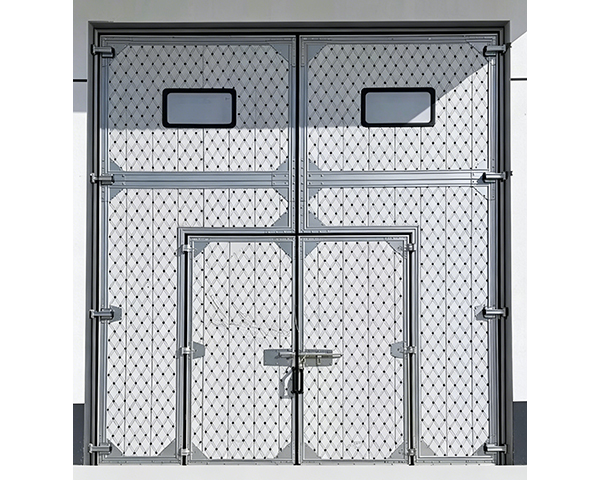
Flexible gate industrial door solutions are becoming an essential part of modern building design,
especially in facilities that require secure access control, efficient workflow, strong durability,
and adaptable space management. As commercial and industrial buildings continue to evolve, the demand
for high-performance industrial door systems has increased across warehouses, factories, logistics centers,
parking structures, distribution hubs, commercial complexes, and mixed-use developments.
A flexible gate industrial door solution is not just a physical barrier. It is a functional building
component that helps improve safety, reduce energy loss, support operational efficiency, and maintain
controlled entry in high-traffic environments. For architects, contractors, facility managers, and
property owners, choosing the right industrial door type can directly affect daily performance,
maintenance costs, security levels, and long-term building value.
This guide provides comprehensive, original, SEO-friendly information about flexible gate industrial door
solutions for modern buildings. It covers definitions, applications, technical features, advantages,
common specifications, selection criteria, and installation considerations. The content is written for
use in blog posts, category pages, industry pages, and directory-style web pages.
Flexible gate industrial door solutions refer to industrial door systems designed to combine strength,
adaptability, accessibility, and efficient operation. The term “flexible” may describe a range of door
structures and control methods that can be adapted to different building types, opening sizes, usage
frequencies, and environmental conditions.
In modern buildings, flexible gate industrial doors are often used where traditional rigid entry systems
are not ideal. These doors may include rapid action doors, sectional industrial doors, rolling shutter
doors, high-speed fabric doors, folding gates, sliding gate systems, insulated industrial doors, and
automated access gates. Depending on the application, they may be designed for frequent cycling, thermal
control, noise reduction, visual separation, or enhanced security.
The core purpose of a flexible gate industrial door is to create an efficient transition between indoor
and outdoor spaces or between different internal zones while minimizing disruption to operations. This
makes them highly valuable in facilities where movement of people, forklifts, vehicles, goods, and
equipment must happen smoothly and safely.
Modern buildings are expected to deliver more than just structural function. They must support energy
efficiency, automation, security, sustainability, and user convenience. Flexible gate industrial door
solutions align with these goals by offering practical benefits that improve building performance at
multiple levels.
In industrial and commercial environments, doors often open and close many times per day. Poorly designed
access points can cause heat loss, dust infiltration, security risks, workflow interruptions, and unnecessary
wear. A flexible industrial door system helps manage these problems by enabling controlled access, fast
movement, and dependable sealing.
In addition, flexible gate systems are increasingly integrated with smart building technology. Automated
control panels, remote access, safety sensors, motion detectors, and access authorization systems help
modern facilities maintain efficient operations and compliance with current safety expectations.
There are many variations of industrial doors, and each type serves different building needs. The following
table summarizes commonly used flexible gate industrial door solutions and their general applications.
| Door Type | Typical Structure | Primary Use | Main Benefit |
|---|---|---|---|
| Sectional Industrial Door | Panel-based vertical or horizontal opening system | Warehouses, loading bays, workshops | Space-saving operation and insulation |
| Rolling Shutter Door | Interlocking slats roll into a coil | Retail back entrances, industrial units, storage areas | Compact design and strong security |
| High-Speed Door | Fast-moving flexible curtain or fabric system | Cold rooms, clean zones, logistics lines | Reduced air exchange and traffic efficiency |
| Folding Gate Door | Panels fold laterally or vertically | Large openings, hangars, factories | Wide access with durable structure |
| Sliding Industrial Gate | Gate moves along a track to one side | Yards, perimeter control, vehicle entrances | Reliable access control for large spans |
| Insulated Industrial Door | Thermally enhanced panels or curtain | Temperature-controlled buildings | Energy efficiency and climate control |
| Automated Access Gate | Motorized opening system with controls | Controlled entry points and secure zones | Convenience and enhanced security |
Flexible gate industrial door solutions are valued for a combination of performance features. These features
help buildings stay secure, efficient, and adaptable under demanding operating conditions.
Industrial doors must withstand repeated use, environmental exposure, impact risk, and mechanical stress.
Common materials include galvanized steel, aluminum, reinforced PVC, insulated composite panels, stainless
steel, and heavy-duty hardware components. Durability is a critical factor in long-term operational value.
Many flexible gate industrial doors are designed to minimize the space required for opening and closing.
This is especially useful in facilities where wall space, ceiling clearance, or driveway depth is limited.
Sectional, rolling, and folding systems are popular because they preserve usable space.
In logistics, manufacturing, and distribution environments, doors may cycle hundreds of times per day.
Flexible gate industrial doors are built to handle frequent operation while maintaining reliability and
smooth movement.
Insulated doors help regulate internal temperature and reduce energy loss. This feature is particularly
important for warehouses, cold storage, food processing plants, and buildings with heating or cooling
efficiency goals.
A flexible industrial gate solution can help protect valuable assets by limiting unauthorized access.
Reinforced panels, locking systems, access control integration, and motorized operation all contribute to
stronger perimeter security.
Modern industrial doors often include safety edges, photoelectric sensors, emergency stop systems, warning
lights, manual release options, and anti-collision features. These elements help reduce accidents and support
safe operation in busy environments.
Many modern buildings require automated entry solutions. Flexible gate industrial doors can integrate with
control panels, RFID systems, remote controls, motion sensors, timers, and building management systems.
Choosing the right industrial door system can deliver long-term operational advantages. Below are the most
important benefits associated with flexible gate industrial door solutions for modern buildings.
| Advantage | Description | Building Impact |
|---|---|---|
| Improved Workflow | Fast and reliable access helps reduce bottlenecks. | Better logistics efficiency and productivity |
| Enhanced Security | Controlled entry helps protect people, goods, and equipment. | Lower risk of theft and unauthorized access |
| Energy Efficiency | Insulated and fast-closing doors reduce temperature loss. | Lower heating and cooling costs |
| Noise Reduction | Some industrial door systems help reduce sound transfer. | Improved workplace comfort |
| Space Optimization | Compact opening mechanisms preserve usable floor area. | More efficient facility layout |
| Operational Flexibility | Different opening modes and control options suit various needs. | Adaptability for changing business operations |
| Long Service Life | Properly selected doors can perform reliably over many years. | Reduced replacement frequency and lifecycle cost |
Flexible gate industrial door systems are widely used across modern building categories. Their versatility
makes them suitable for both external and internal openings, as well as vehicle access and pedestrian access
points.
Warehouses often require doors that support fast loading and unloading, secure storage, and efficient
movement between zones. Flexible gate industrial doors help maintain productivity while controlling
environmental conditions.
Manufacturing buildings need durable doors that can handle heavy use, machinery movement, and workflow
separation. Industrial door solutions can also help define clean areas, restricted areas, and transport
pathways.
Temperature-sensitive operations depend on doors that reduce air leakage and limit energy waste. High-speed
and insulated flexible gate doors are especially useful in these environments.
Access points for vehicles require reliable opening systems that support safety, traffic control, and weather
resistance. Sliding gates and rolling doors are often used in these settings.
Modern commercial complexes may use industrial-grade doors for service areas, delivery zones, utility rooms,
and security entrances. These systems help maintain a clean architectural appearance while improving control.
Very large openings need specialized door systems with strong structural performance and reliable operation.
Flexible folding or sectional industrial door solutions are commonly used in such applications.
When evaluating flexible gate industrial door solutions, it is important to review technical specifications.
The correct specification depends on building use, environmental conditions, traffic volume, and security
requirements.
| Specification | Common Options | Why It Matters |
|---|---|---|
| Door Material | Steel, aluminum, PVC, composite, stainless steel | Determines strength, corrosion resistance, and weight |
| Opening Method | Vertical lift, roll-up, slide, fold, rapid open/close | Affects space use and operating speed |
| Door Size | Standard or custom dimensions | Must match the opening and operational requirements |
| Insulation Level | Non-insulated, semi-insulated, fully insulated | Impacts energy performance and climate control |
| Cycle Rating | Low, medium, high-frequency use | Indicates expected usage durability |
| Automation | Manual, semi-automatic, fully automatic | Supports convenience and efficiency |
| Wind Resistance | Light, medium, high-performance wind load levels | Important for exposed sites and large openings |
| Safety Features | Sensors, safety edges, emergency release, alarms | Helps prevent accidents and damage |
| Surface Finish | Powder coating, galvanized finish, painted finish | Improves appearance and corrosion resistance |
| Control System | Buttons, remote, sensors, access cards, smart controls | Supports operational management and security |
Material selection plays a major role in industrial door performance. Different materials provide different
levels of strength, insulation, maintenance demand, and visual finish.
Steel is one of the most common industrial door materials because it offers strong structural performance
and high resistance to impact. It is often used in security-focused environments and heavy-duty applications.
Aluminum is lightweight, corrosion-resistant, and suitable for doors that require smooth movement or modern
visual appeal. It is often used in sectional doors, transparent panel systems, and commercial entrances.
Flexible curtain doors and high-speed systems often use PVC or reinforced fabric materials. These are
excellent for rapid access, environmental separation, and fast cycle operation.
Composite systems combine different materials to improve insulation, strength, and appearance. They are
commonly used where thermal efficiency and durability are both priorities.
Stainless steel is used in environments that require excellent corrosion resistance, hygiene, or chemical
durability. It is suitable for food processing, pharmaceutical, and clean industrial settings.
Energy efficiency is a major consideration in modern building planning. Industrial doors can affect heating,
cooling, and ventilation performance significantly. A poorly performing opening can become a major source of
energy loss.
Flexible gate industrial door solutions help improve energy efficiency in several ways. Insulated panels reduce
heat transfer. Fast opening and closing reduce the time that conditioned air escapes. Tight sealing systems
help block drafts, dust, and external temperature fluctuations. In buildings with repeated traffic movement,
these benefits can lead to measurable operational savings over time.
This is especially important in warehouses, refrigerated storage, and facilities with climate-sensitive
materials. The correct door system supports both sustainability goals and cost control.
Security is another major reason why modern buildings use flexible gate industrial doors. These systems can
be designed to resist forced entry, limit access to restricted zones, and integrate with electronic security
infrastructure.
Security features may include reinforced frames, locking bars, coded access, automatic closure, monitored
entry points, and compatibility with surveillance systems. In industrial zones, security is not only about
theft prevention. It also helps maintain safe workflow separation and prevents unauthorized movement into
operational areas.
Safety must be a priority in every industrial door installation. Since these systems are often large, heavy,
and frequently used, they should be designed and operated with accident prevention in mind.
Common safety considerations include obstacle detection, pinch-point protection, emergency stop functions,
manual override in power failures, impact-resistant materials, clear visual indicators, and regular service
checks. For automated flexible gate systems, sensor placement and control logic are especially important.
Safe operation also depends on user training and maintenance discipline. Workers should understand how to use
the system correctly, how to report problems, and how to respond during power interruption or emergency
conditions.
One of the strongest advantages of flexible gate industrial door solutions is customization. Modern buildings
often have specific functional and design requirements, which means a one-size-fits-all product is rarely the
best choice.
Customization may include door size, panel thickness, material type, surface finish, insulation rating, window
inserts, opening speed, access control technology, color selection, wind resistance rating, and fire or smoke
performance characteristics where applicable. Custom sizing is especially common for large industrial openings
and renovation projects.
This ability to tailor the door to the application makes flexible gate industrial doors suitable for a wide
range of architecture and workflow patterns.
Regular maintenance helps industrial doors maintain safe and efficient performance. Even the best-designed
system can experience wear over time if it is used heavily without inspection and servicing.
Maintenance tasks often include checking tracks, rollers, springs, hinges, sensors, seals, control systems,
motors, and mounting hardware. Cleaning moving parts, lubricating mechanisms, testing safety devices, and
inspecting surface condition can extend service life and reduce breakdown risk.
A proactive maintenance plan is especially important in high-cycle environments. Preventive servicing usually
costs less than emergency repair and helps reduce downtime in operations where door failure can disrupt
logistics or compromise safety.
Choosing the right industrial door depends on a balance of functional, environmental, and operational
factors. The following points can help guide the selection process.
The table below gives a general example of how flexible gate industrial door specifications may be presented
in industry content. Actual project values vary by design, application, and building requirements.
| Specification Category | General Range / Options | Application Note |
|---|---|---|
| Door Width | Small to extra-large custom openings | Depends on vehicle or pedestrian access needs |
| Door Height | Standard to high-clearance formats | Important for trucks, machinery, and tall equipment |
| Opening Speed | Slow, medium, or rapid cycle | Fast doors help improve traffic flow |
| Insulation Thickness | Light, medium, or high thermal protection | Supports energy-saving and climate control |
| Operating Mode | Manual, electric, automatic | Chosen based on workflow and convenience |
| Security Level | Basic, enhanced, high-security | Driven by asset protection requirements |
| Usage Environment | Indoor, outdoor, refrigerated, heavy-duty | Environmental compatibility is essential |
| Finish Type | Painted, coated, galvanized, stainless | Affects aesthetics and durability |
For content planning and search engine optimization, it is useful to align the page with relevant keyword
themes. These terms may be naturally integrated throughout the text for improved topical relevance.
The industrial door market continues to develop in response to changing building standards and operational
demands. Several trends are shaping the future of flexible gate industrial door solutions.
One major trend is automation. As buildings become smarter, door systems are increasingly connected to
sensors, data platforms, and remote control systems. Another trend is energy performance, with more buyers
seeking insulated and high-speed solutions to reduce loss and improve efficiency.
Design flexibility is also important. Modern architecture often demands products that are functional but
also visually integrated into the building envelope. As a result, manufacturers and specifiers are focusing
on cleaner lines, customizable finishes, and multi-purpose door designs.
Sustainability is another key topic. Durable materials, repairable structures, and energy-saving operation
modes are becoming more important in procurement decisions. The market also shows growing interest in
safety-enhanced systems that reduce accidents in fast-paced facilities.
Flexible gate industrial door solutions play a vital role in modern buildings by improving access control,
workflow efficiency, security, energy performance, and operational flexibility. From warehouses and factories
to commercial developments and specialized storage facilities, the right industrial door system can support
both everyday function and long-term value.
When selecting a flexible gate industrial door, it is important to evaluate material quality, opening method,
insulation, automation, safety features, and maintenance requirements. A well-chosen system can deliver
reliable performance across demanding environments while supporting modern expectations for efficiency and
control.
For SEO-oriented website content, this topic offers strong keyword relevance, practical depth, and broad
industrial application. Flexible gate industrial door solutions remain an essential subject for any building,
access control, or industrial infrastructure page focused on modern performance and durability.
```
Produtos metálicos Co. de Shenyang Manlong, Ltd.


Copyright © 2026 Shenyang Manlong Metal Products Co., Ltd. Todos os direitos reservados Aplicativos
Este site usa cookies para garantir que você tenha a melhor experiência em nosso site.

 English
 Español
 Pусский
 Français
 Deutsch
 العربية
 ไทย
ไทย Türk dili
 Tiếng Việt



 Telefone
Comente
(0)